Residential Mosquito Control Treatment in Alameda County
The Alameda County Mosquito Abatement District conducts targeted ground-based larvicide and adult mosquito control applications to reduce mosquito populations and protect public health across Alameda County. Our treatment programs are a core component of an evidence-based Integrated Vector Management (IVM) strategy that prioritizes human safety, environmental responsibility, and community health.
All pesticides used are registered with the US Environmental Protection Agency (EPA) and regulated by the California Department of Pesticide Regulation (CDPR) and Alameda County Department of Agriculture. All treatment applications are conducted by District staff who are certified by the California Department of Public Health (CDPH).
All pesticides used by the District are listed alongside their corresponding label and Safety Data Sheets (SDS) here.
Treatment notifications are posted on this page as soon as they are confirmed. The District will aim to provide notification of treatments as early as operationally possible. Scheduled treatments may be canceled and/or rescheduled due to weather or other unforeseen reasons.
- Residents do not need to close their windows or doors during mosquito control treatments. Residents may choose to take these additional precautions, but they are not required for safety because treatments are conducted in accordance with product label directions and application rate. This guidance is consistent with recommendations from the U.S. Environmental Protection Agency (EPA) and the California Department of Pesticide Regulation (DPR). If you prefer to limit exposure to the mosquito treatment, you may close windows and stay indoors during treatment.
- Air conditioning can remain on.
- Please allow District staff to complete the treatment without interruption.
- You may notice a light residue on outdoor surfaces after treatment. It will wash away with water and can safely drain into the sewer.
- Fruits and vegetables are safe to eat after treatment. Wash them as you normally would before eating.
The District's mosquito control treatments are conducted in the late evening and very early morning hours, typically between 10pm and 4am and follow strict federal, state, and local regulations/guidelines for applications.
Why Mosquito Control Treatments Matter for Public Health
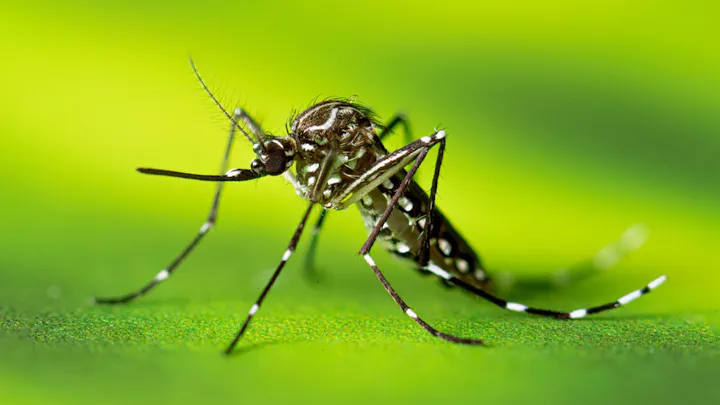
Mosquitoes are more than a backyard nuisance; they can transmit diseases. In Alameda County, some native mosquito species can transmit West Nile virus and the discovery of invasive Aedes aegypti mosquitoes in 2024 present the risk of transmission of diseases like dengue and Zika. Different mosquito species are capable of transmitting different mosquito-borne diseases.
Without quick action, mosquito populations can grow quickly. A single untreated water source — a pot saucer, an unmaintained swimming pool, or a lawn drain — can produce many adult mosquitoes over time. Mosquito control treatments can effectively reduce mosquito populations, which decreases the risk of mosquito-borne disease transmission to Alameda County residents.
- Breaks the mosquito life cycle before female adults emerge and bite.
- Reduces the risk of West Nile virus and other mosquito-borne diseases for residents in Alameda County.
- Reduces the spread of invasive Aedes aegypti, which are aggressive daytime biters and harder to control.
- Supports the District’s commitment to an environmentally responsible and data-driven Integrated Vector Management (IVM) approach.
Wide Area Larvicide Spray (WALS) Treatment in Alameda County
An effective mosquito control strategy is to target mosquitoes in the larval stage, after they hatch from eggs. Targeting their larval stage, when immature mosquitoes are concentrated in a smaller area, allows us to reduce their population quickly, before they start biting. A benefit of this mosquito prevention tool is that it allows for treatment of areas that are difficult to access, such as behind gates or in backyards, and the treatment will settle into hidden sources of standing water.
The District's Wide Area Larvicide Spray (WALS) treatments serves as an efficient method to target mosquito larvae across large residential areas before they develop into adults. Reducing adult mosquito populations leads to fewer females and, ultimately, fewer mosquito bites.
Active ingredient: Bacillus thuringiensis subspecies israelensis (Bti)
- Bti is a natural bacterium that targets mosquito, black fly, and fungus gnat larvae. It is safe for humans, pets, and other animals, including pollinators
WALS (Wide Area Larvicide Spray) treatment is a ground-based treatment method for controlling immature mosquitoes before they become biting adults. WALS treatments have been used throughout the state and country to reduce Aedes aegypti populations and are performed in conjunction with other IVM strategies, such as public outreach and mosquito monitoring, to promote a comprehensive public health response.
These treatments use a biological larvicide that has Bacillus thuringiensis sub-species israelensis (Bti) — a naturally occurring soil bacterium — directly to standing water where mosquito larvae are developing. Bti specifically targets the larvae of mosquitoes, black flies, and midges and is non-toxic and non-pathogenic to humans, birds, fish, mammals, and beneficial insects, such as honeybees, dragonflies and butterflies.
These treatments are usually made with a truck-mounted applicator that disperses a fine mist into the air. The mist droplets are small enough to target standing water in hidden sources where mosquito larvae are present. This treatment may leave a slight residue but will wash away with water and is safe to drain into the sewer.
By targeting the larval stage of the mosquito, the Alameda County Mosquito Abatement District is reducing mosquitoes at their source before they become flying biting female adults.
2026 WALS Treatments and Locations
| Status | Application Date | Time | Location | Product used |
|---|---|---|---|---|
| Completed | 7/23/2026 | 11 p.m. - 1 a.m. | Castro Valley | VectoBac® WDG |
| Completed | 8/14/2026 | 3 a.m. - 6 a.m. | Fremont | VectoBac® WDG |
| Completed | 9/22/2026 | 11 p.m - 3 a.m. | Livermore | VectoBac® WDG |
| Completed | 10/13/2026 | 11 p.m - 3 a.m. | Livermore | VectoBac® WDG |
NOTE: Map above shows where residents can expect to see District staff performing the larval mosquito control treatment.
Adult Mosquito Control Treatments
Adult mosquito control treatments, or adulticide treatments, are reserved for disease activity (such as West Nile virus activity) which is indicated by mosquito monitoring data collected by the Alameda County Mosquito Abatement District.
When data indicates that adult mosquito populations have reached levels that threaten public health, the District may deploy adult mosquito control treatments to rapidly reduce adult populations. Similar to larvicide treatments, the applications follow strict federal, state, and local guidelines.
2026 Adult Mosquito Control Treatments and Locations
| Status | Application Date | Time | Location | Product used |
|---|---|---|---|---|
| Completed | 6/17/2026 | 11 p.m. | Newark | Evergreen ULV 5-25 Ground (Public Health Insecticide) |
| Completed | 7/10/2026 | 12 a.m. | Newark | Evergreen ULV 5-25 Ground (Public Health Insecticide) |
NOTE: Map above shows where residents can expect to see District staff performing the adult mosquito control treatment.
Past Mosquito Control Treatment History
2025 WALS Treatments
September 5, 2025 - Larval treatment for Aedes aegypti scheduled for Sept 5th in Altamont Creek neighborhood of Livermore
September 26, 2025 - New detection of multiple Aedes aegypti mosquitoes prompt larval treatment on September 26th in Jensen and Windmill Springs neighborhoods
October 7, 2025 - Larval treatment for eastern Livermore between S. Vasco Rd and East Ave on Oct 7th
October 9, 2025 - Detection of Invasive Mosquito in Northern Fremont Larval Treatment on October 9th, 2025 from 4am to 5 am
October 10, 2025 - Larval treatment for eastern Livermore on Oct 10th, 3am to 5am
No adult mosquito control treatments were completed in 2025.
Frequently Asked Questions
Yes, the Alameda County Mosquito Abatement District uses mosquito control products in strict accordance with the law and label recommendations for application rate and are not harmful to people, pets, and other animals.
All our pesticides and applications follow strict federal, state and local guidelines and criteria to ensure proper application and results. Learn more about our effective and safe chemical control method, or call (510) 783-7744 with specific questions.
As the Alameda County Mosquito Abatement District continues to monitor and assess the affected areas where invasive Aedes aegypti is found, the District will conduct Wide Area Larvicide Spray (WALS) treatments if the distribution and number of Aedes aegypti mosquitoes continue to increase.
Our aim is to prevent the establishment and spread of this invasive mosquito in Alameda County. The District will aim to provide the earliest notification of treatment possible on the Mosquito Control Treatment webpage or you can sign up for email notifications.
The District implements data collection and quality control measures to monitor the effectiveness of the treatments. All Departments within the District work together to measure efficacy and efficiency of mosquito control treatments.
One method to test our results includes placing cups of water in hidden locations across the area before the treatment and then reviewing the amount of treatment in each cup to measure treatment success. Adult mosquito monitoring traps are also placed in treatment areas and reviewed regularly to confirm efficacy of treatment.
The most effective step you can take is eliminating standing water in your home and yard. Mosquitoes breed in containers as small as a bottle cap of water, in as few as five days. Use our Backyard Checklist to walk your property and remove standing water sources like plant saucers, buckets, old tires, or kiddie pools. Remember to also check inside your home since mosquitoes can also breed in any containers containing plant clippings and propagating plants. Combining your prevention efforts at home with the treatments performed by the District delivers the best results for your neighborhood.
No, residents cannot opt out of residential mosquito control treatments.
Larvicide targets immature mosquito larvae in the water before they can become biting adults and is the District's preferred, most targeted approach.
Adulticide, most commonly referred to as adult mosquito control, is applied when adult mosquito populations or disease detections, such as West Nile Virus, require rapid control to reduce disease risk. View the corresponding table with treatment information, subscribe for current treatment notifications or call (510) 783-7744 for the latest updates in your area.