Mosquito Repellent
Insect repellent is a safe and effective way to prevent mosquito bites. It is important to use Environmental Protection Agency (EPA)–registered insect repellents because these products have been tested for both safety and effectiveness. Non-registered repellents may not provide the same level of protection, which can lead to mosquito bites and wasted money. Choose a repellent that is known to be effective.
Always read the product label before use and follow the instructions carefully.
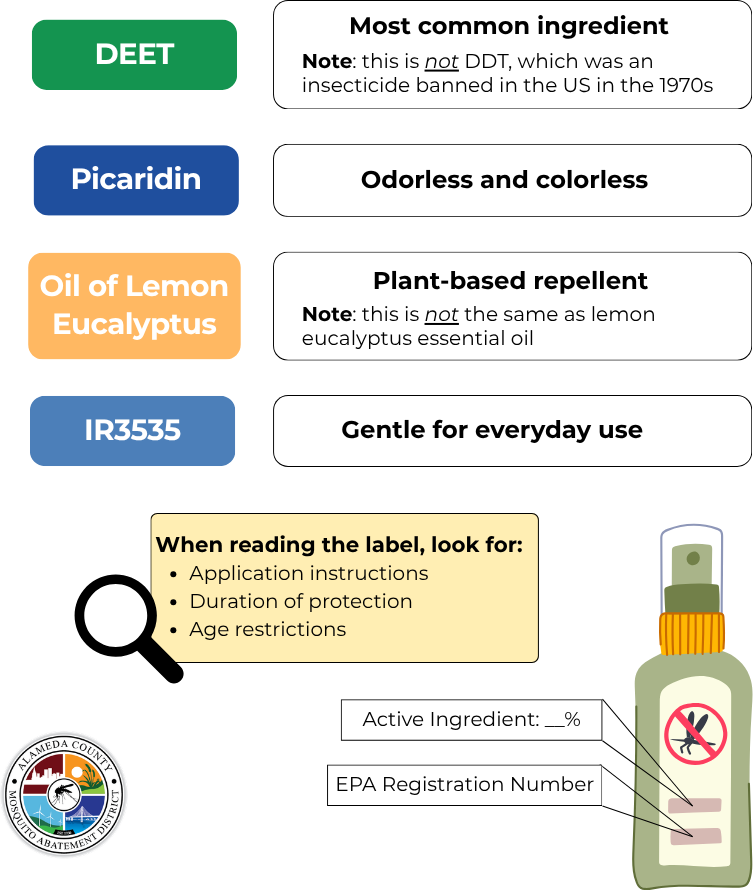
Common active ingredients found in EPA-registered repellents include:
- DEET (note: this is not DDT, which was an insecticide banned in the United States in the 1970s)
- Picaridin
- IR3535
- Oil of Lemon Eucalyptus (note: this is not the same as lemon eucalyptus essential oil)
When selecting a repellent, check the label for:
- An EPA registration number, which indicates the product has been evaluated and approved
- Age restrictions, as some products should not be used on very young children (for example, Oil of Lemon Eucalyptus)
- Whether the product is effective against mosquitoes or other insects
- Application instructions—read the entire label before applying
- Duration of protection and how often the product should be reapplied
Learn more at: www.epa.gov/insect-repellents
Can I use both sunscreen and insect repellent?
When using both sunscreen and insect repellent, apply sunscreen first and then apply repellent. Sunscreen should be reapplied at least every two hours, while most insect repellents last longer and require less frequent reapplication. Combination sunscreen–insect repellent products are not recommended because the two products need to be reapplied on different schedules.
Learn more about different options:
DEET-based repellents have provided dependable protection from mosquitoes since the 1950s. DEET is the active ingredient in many repellent products and is widely used. Repellents containing DEET are available in a variety of forms, including sprays, lotions, and wipes. DEET is the most effective and best-studied repellent ingredient available and it can be used on most ages.
For Ages: 2 months and up
Picaridin is a synthetic repellent developed in the 1990s and has been commercially available in the United States since 2005. For many people, Picaridin is an effective alternative to DEET because it provides long-lasting, effective protection. Picaridin is generally odorless and colorless, allowing many brands to offer pleasantly-scented options. Picaridin can also be used on clothing to provide an extra layer of protection, unlike DEET which should be applied to skin only.
For Ages: 2 months and up
Oil of Lemon Eucalyptus is a natural plant-based repellent derived from the oil of the leaves of the Eucalyptus tree. Repellents containing the Oil of Lemon Eucalyptus tend to have a strong botanical smell and are available in a wide variety of formulations, including pump sprays and lotions. It can be irritating to some skin types, and it is not recommended for children under 3 years of age.
For Ages: Over 3 years
IR3535®, also called Merck 3535, is registered with the EPA as a biopesticide but has been used as a synthetic repellent in Europe for over 20 years with no significant harmful effects. IR3535® was approved for use in the United States in 1999 and is currently available in aerosol, pump sprays, and wipes. While EPA recognizes the use of IR3535® as safe for adults and children, be advised that it is an eye irritant, therefore use caution when spraying and wash hands after applying to skin.
For Ages: Over 6 months
Protection Time or Active Ingredient Percentage (%)
Not all products list how many hours a repellent is effective at preventing mosquito bites. In general, a repellent with a higher percentage of active ingredient will provide longer-lasting protection.
Choose a repellent that will protect you for the amount of time you plan to be outdoors. Keep in mind that sweating or getting wet can reduce how long a repellent remains effective.
Who should use repellent and when?
Use insect repellent whenever you spend time outdoors in areas with mosquitoes, especially during the warmer months of the year.
EPA-registered repellents are safe for use on:
- Adults
- Pregnant or breastfeeding women
- Children older than 2 months
According to the California Department of Public Health, insect repellent should not be used on babies younger than 2 months old. To protect infants from mosquito bites, dress them in clothing that covers their arms and legs, and use mosquito netting over cribs, strollers, or baby carriers.
Mosquitoes are more active during warmer months, increasing the likelihood of bites. Different species are active at different times of day. For example, Culex mosquitoes, which can spread West Nile virus, are most active at dawn and dusk. Use repellent if you will be outdoors early in the morning or in the evening before dark. Aedes mosquitoes, which may carry Zika virus (including Aedes aegypti and Aedes albopictus), are found throughout California and are active during the daytime.