When to Inform the Alameda County Mosquito Abatement District
From the salt marshes of the East Bay to the vineyards of the Livermore Valley, mosquitoes can complete their life cycle in different standing water sources across Alameda County. As a local agency, we encourage residents to check in and around their homes, backyards, and neighborhoods for standing water. By doing so, residents can help reduce mosquitoes in communities across Alameda County.
While mosquitoes are a part of life here, If you notice unusual mosquito biting activity, daytime biting around your legs and ankles, standing water that cannot be drained, or an unmaintained swimming pool or pond, you can help protect your community by reaching out to the Alameda County Mosquito Abatement District.
Informing us is easy. Simply give us a call or use our online service request form and provide the details. A trained District technician will come out, inspect, inform, and handle it so you can enjoy healthier living. You don't need to be certain you've found the source; that's our job. It’s a partnership: you're the eyes of the community and we bring the crew, the science, and the mosquitofish.
We've been protecting the public health of Alameda County since 1930. And we’re still at it.
Get to Know the District
The Alameda County Mosquito Abatement District is dedicated to improving the health and quality of life of Alameda County residents by reducing mosquitoes and limiting the transmission of mosquito-borne diseases. Based in Hayward, California, we are a local public health agency, funded by your property taxes and special benefit assessments. Our services are provided at no cost to Alameda County residents.
For more than 95 years, the District has safeguarded public health throughout Alameda County by routinely monitoring mosquito populations with mosquito monitoring traps, testing mosquito samples for mosquito-borne diseases, such as West Nile virus. Our team also conducts mosquito control treatments when needed to reduce disease activity.
District programs include providing mosquitofish at no cost to residents for water features and implementing our unmaintained swimming pool program. In addition, the District offers community outreach presentations for local agencies, schools, and community groups to educate residents on how to recognize, prevent, and eliminate standing water sources.
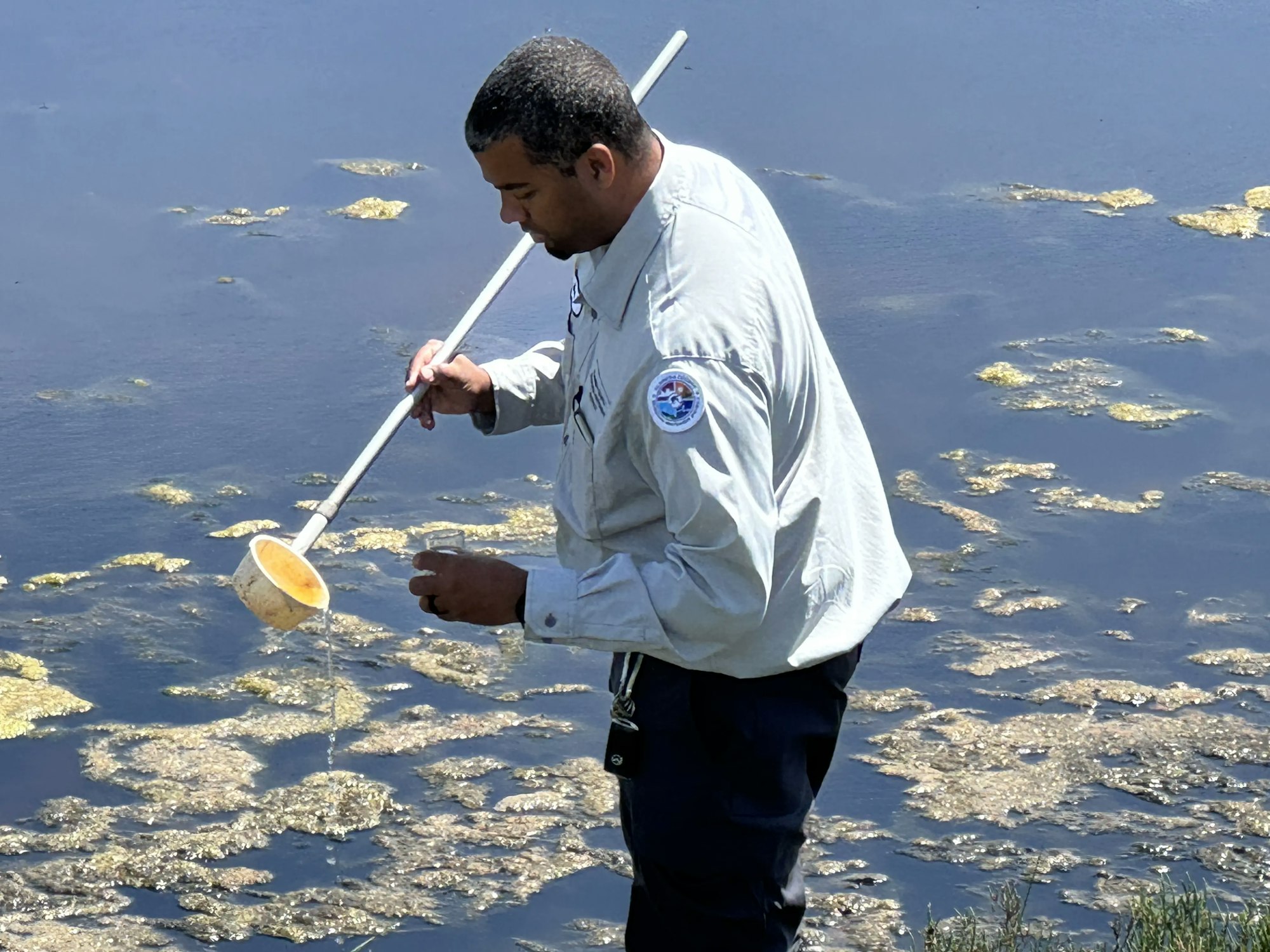
What we do. We provide services at no cost to all Alameda County residents, including addressing mosquito issues, providing mosquitofish, identifying insects (mosquito-like insects), and looking for and treating standing water. Our trained District staff will visit the site and check for standing water sources and mosquito biting activity.
We also:
- Monitor the County for mosquito abundance and mosquito-borne disease activity
- Inspect and treat standing-water sources year-round
- Identify mosquitoes and other insects
- Integrate an education program for schools and community groups
Integrated Vector Management. The District works under an Integrated Vector Management (IVM) program, an environmentally conscious and proven approach. We identify the mosquito species and its preferred habitat. From there, we focus on the standing water source and larval stage of the mosquito. For example, the local summer salt marsh mosquito (Aedes dorsalis) breeds in the tidal salt marsh shoreline along the East Bay. District staff conduct year-round larval control treatments in these marshlands to reduce the mosquito populations. Other tools from our IVM toolbox include source reduction, mosquitofish, and naturally occurring larvicides such as Bti.
Innovation and technology. We use precision-based drones to enhance mosquito detection and apply pesticide applications in difficult-to-access, environmentally sensitive, and non-residential areas, such as nature reserves and the salt marshes along the East Bay shoreline. This approach is less disruptive to habitats and improves employee safety in challenging terrain and remote areas.
The District is also committed to researching new innovative programs, methods, and strategies aligned with an Integrated Vector Management (IVM) approach.
Unmaintained pool program. One unmaintained pool can breed millions of mosquitoes in a month. Each year, the District uses satellite imagery analysis and/or an aerial survey to identify unmaintained pools county-wide and follows up with residents to provide services to prevent mosquitoes at no cost.
When Should I Inform the District?
Sometimes we’re not sure when to inform the District. That’s okay. Here’s a quick guide on when and how to inform us. Mosquito prevention starts with you, and we take care of the rest.
Inform the Alameda County Mosquito Abatement District if you notice:
- Unusual mosquito activity. Are you noticing increased mosquito biting activity or daytime mosquito biting? Reach out to the District and trained District staff will visit the area and identify the mosquito species and potential standing water sources. We also encourage residents to wear long, loose-fitting shirts, pants, socks, and shoes when mosquitoes are most active and use an EPA-registered insect repellent when spending time outdoors.
- Standing water you can't deal with. It takes little water - a bottle cap's worth - for mosquito eggs to hatch.
- A unmaintained pool, spa, or other water feature. Unmaintained water features can produce large numbers of mosquitoes over time. If you notice one, let the Alameda County Mosquito Abatement District know. We will work with the property owner to identify the problem and provide services at no cost to help find a solution. This way, we can continue to reduce mosquitoes across Alameda County.
- A dead bird, especially a crow, jay, or raven. Dead birds can be an early warning of West Nile virus activity in an area. Report the dead bird to the California Department of Public Health West Nile Virus Center at westnile.ca.gov or 1-877-WNV-BIRD (1-877-968-2473). Once the dead bird is reported to the state, District staff will pick up the bird and test the bird for West Nile virus if it meets testing criteria.
- An insect you are unsure about. There are plenty of mosquito look-alikes in Alameda County, such as midges and fungus gnats, get mistaken for mosquitoes. If you are unsure what kind of insect it is, District staff can identify the insect at no cost.
.webp?ixlib=rb-1.1.0&rect=0%2C885%2C2120%2C1142&auto=format%2Ccompress&w=2000&h=2000&fit=max&or=0&s=da823643b883d4f3e6a7014eeb8fab1f)
Prevention Starts at Home
Mosquito prevention starts at home. Mosquitoes only need a tiny amount of standing water to breed, as small as a bottle cap, with eggs to adults in less than a week (remember, only female adult mosquitoes bite). The invasive Aedes aegypti mosquito (yellow fever mosquito) lays eggs in small containers, like buckets or pot saucers, close to residences. Check and remove any standing water in and around your home on a weekly basis.
Weekly Backyard Checklist
☐ Empty and scrub plant saucers, buckets, water toys, and containers holding water for more than a couple of days
☐ Pour off water sitting on pool or spa covers, tarps, and equipment
☐ Clear leaves and debris from rain gutters so they drain instead of pool
☐ Swap out the water in birdbaths, fountains, and pet bowls on a weekly basis
☐ Peek into tree holes and hollows — the native tree-hole mosquito species in Alameda County can breed there
☐ Toss out old tires, or drill drain holes if they're used for play equipment
☐ Fix dripping faucets and outdoor plumbing before puddles form
☐ Contact the Alameda County Mosquito Abatement District for mosquitofish at no cost for appropriate water features, which our staff will confirm
☐ Keep pools and spas clean, maintained, and constantly filtering water
☐ Screen or securely seal rain barrels and large containers you are not able to empty
Notice an unmaintained swimming pool, pond or water feature in your neighborhood? Contact the Alameda County Mosquito Abatement District and let us know.
.webp?ixlib=rb-1.1.0&w=2000&h=2000&fit=max&or=0&s=3bd0b3fd2ac0c78ce291e0de1eb08449)
News and Updates, Right to Your Inbox
Stay up to date with local mosquito news, programs, and updates from the Alameda County Mosquito Abatement District by signing up for our newsletters.
- Adult Mosquito Control Notifications
- Innovative Mosquito Reduction Updates
- Press Releases
- Quarterly Newsletters with seasonal prevention reminders, updates about West Nile virus, and invasive Aedes activity