Summer Newsletter 2026
A New Tool to Combat Invasive Mosquitoes
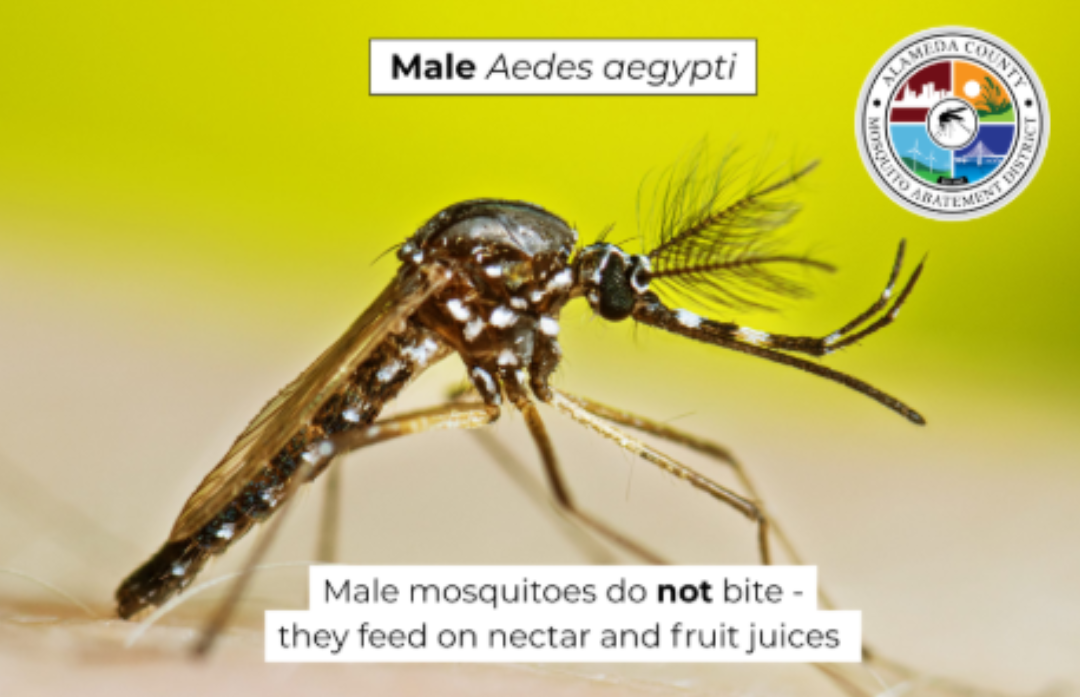
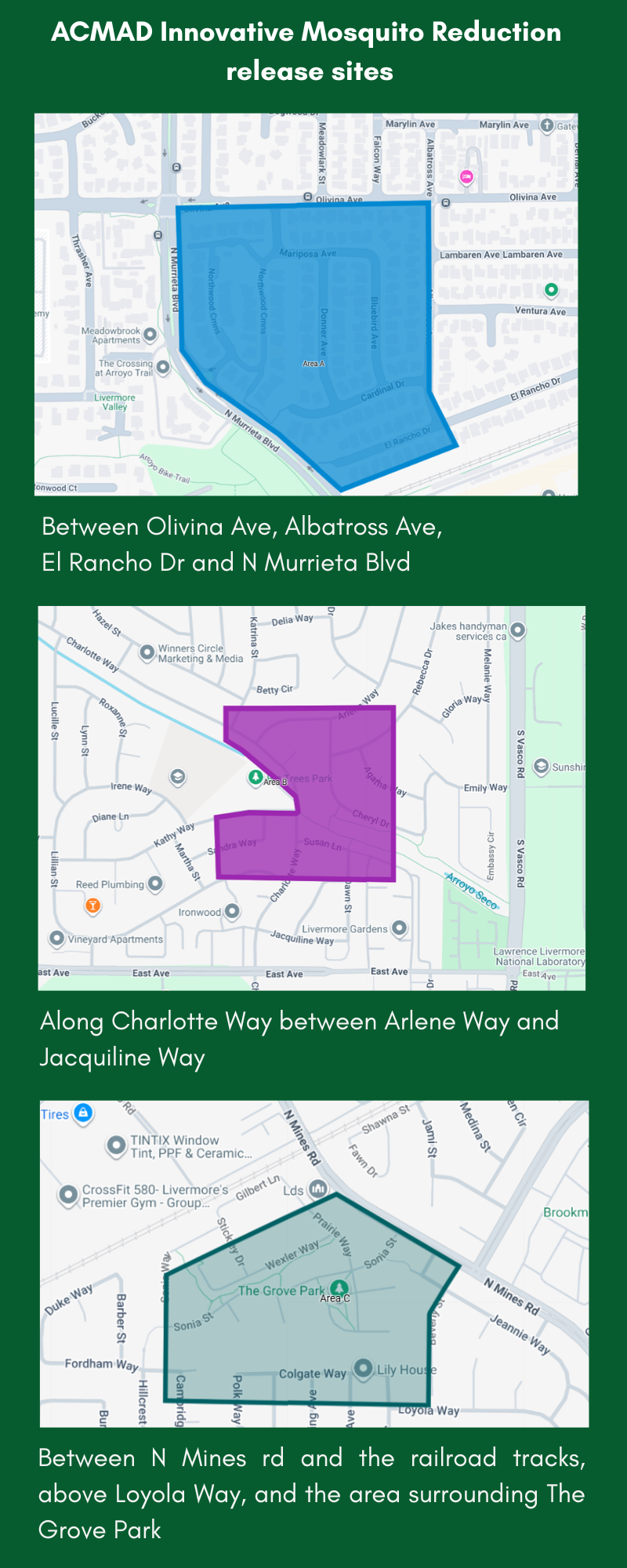
Beginning July 7, Livermore residents may notice more mosquitoes in their neighborhoods—but that doesn't mean they'll receive more mosquito bites. The Alameda County Mosquito Abatement District (ACMAD) is releasing Wolbachia-treated male mosquitoes, known as WB1 males, in three areas of Livermore to help reduce populations of the invasive Aedes aegypti mosquito, which was first detected in the city in 2025.
Aedes aegypti mosquitoes are aggressive daytime biters that commonly bite around the ankles. Unlike many other mosquito species, they prefer to live close to people and lay their eggs in small water-filled containers around homes. Forgotten buckets, plant saucers, toys, and any other item that holds standing water can become a spot for female mosquitoes to lay eggs. These mosquitoes also stay close to where they hatch, typically flying no more than 200 meters during their lifetime. Once established in a neighborhood, Aedes aegypti can be extremely difficult to eliminate using traditional mosquito control methods.
To develop new ways to control this invasive species, researchers looked to successful insect suppression programs, such as those used against the New World screwworm and Mediterranean fruit fly. Since female mosquitoes mate only once during their lifetime, interrupting the mosquito's reproductive cycle could significantly reduce local populations. Two methods are approved for use in the United States: Sterilized Insect Technique (SIT) and Incompatible Insect Technique (IIT) to disturb the fertilization process. The District will move forward with Incompatible Insect Technique, by using Wolbachia-treated male mosquitoes. Wolbachia bacteria is added to individual male Aedes aegypti mosquitoes and when they are released in a specific geographic area and mate with female Aedes aegypti mosquitoes any resulting eggs will not hatch. Wolbachia is a naturally occurring bacterium that is found in more than 60% of insects, including butterflies, bees, and dragonflies. Male mosquitoes cannot transfer the bacteria to other animals besides female mosquitoes. Government agencies have also used this method in California, Texas, Florida, and internationally.
ACMAD selected the Wolbachia approach after detecting all four life stages of Aedes aegypti in specific Livermore neighborhoods. MosquitoMate, a Kentucky-based company, will supply the WB1 male mosquitoes for weekly releases over a 16-week period. "The District has been preparing for the arrival of invasive mosquitoes for more than a decade," said ACMAD General Manager Ryan Clausnitzer. "We know that Aedes aegypti mosquitoes not only make outdoor activities unpleasant, but also have the potential to spread disease. WB1 male mosquitoes provide a safe, environmentally friendly, and effective way to reduce invasive mosquito populations without disrupting daily life. We are excited to add this proven tool to our Integrated Vector Management program."
While residents may notice an increase in mosquitoes during the release period, only male mosquitoes are being released. As the WB1 males mate with local female Aedes aegypti mosquitoes, the invasive mosquito population is expected to decline over time. Residents can support the program by continuing to remove standing water around their homes, which will help reduce opportunities for Aedes aegypti. To learn more about the program, read our page: Innovative Mosquito Reduction in Alameda County or sign up for updates by clicking on Innovative Mosquito Reduction Updates on the bottom of the ACMAD subscribers sign up page: Stay in touch.
See the release sites below:
A major change at ACMAD

After 35 years of service to the District, Field Operations Supervisor Joseph Houston has retired. We will miss the wide breadth of knowledge and dedication he has brought to the District. There's no one quite like him. Happy retirement Joseph!
Former Vector Biologist Erick Gaona is now the new Operations Director.
Keep checking your pools
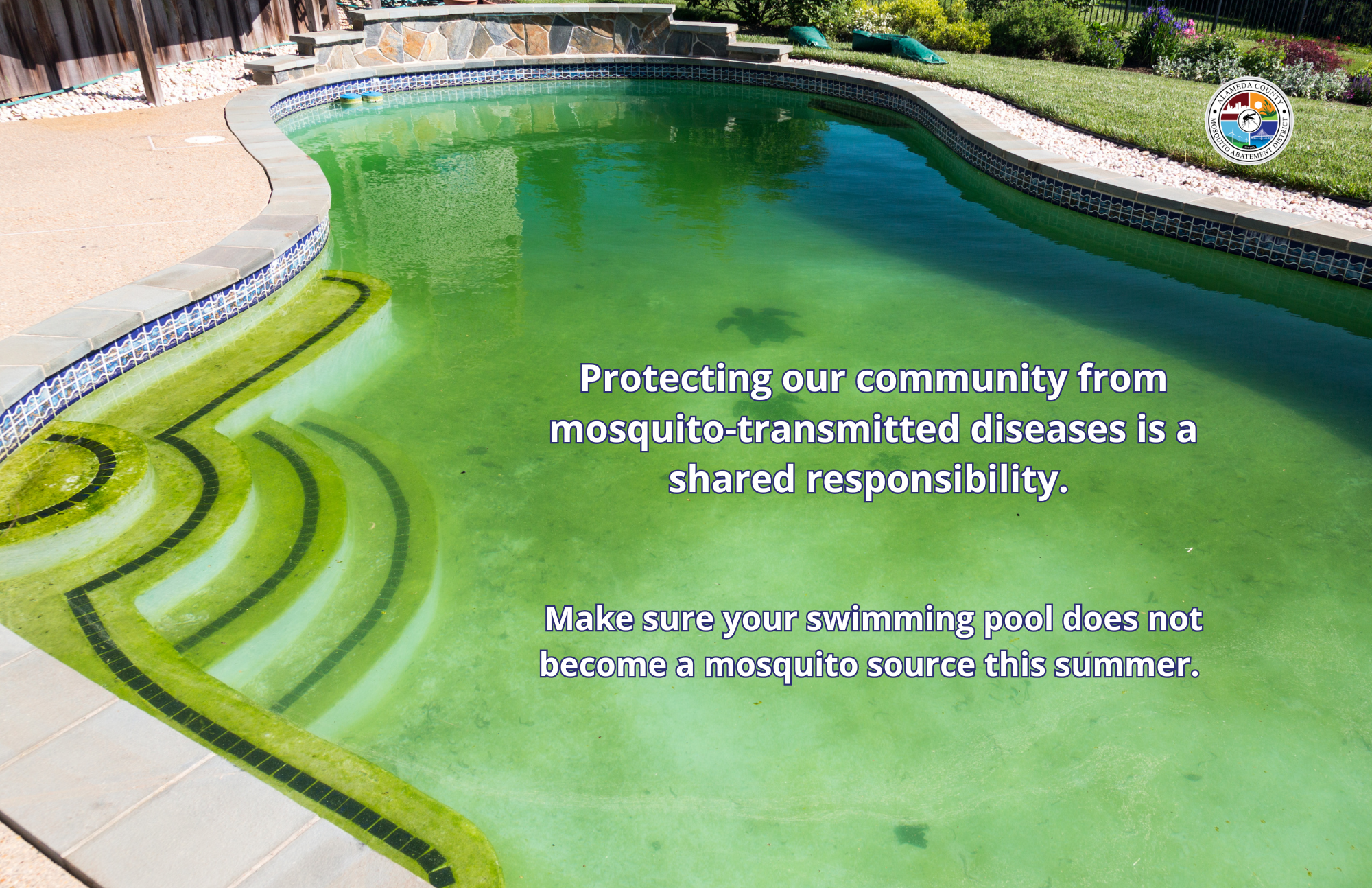
The District mailed more than 170 postcards to properties where unmaintained swimming pools have been identified in the past. The postcards remind residents to contact us if they need additional mosquitofish or assistance treating their pool for mosquitoes. If you received a postcard and have not yet responded, please contact our office at 510-783-7744 or email pools@mosquitoes.org to update us on the current status of your pool.
West Nile virus is circulating again
The District continues to detect dead birds that have tested positive for West Nile virus in Alameda County. Most of the positive birds have been found in southern Alameda County, including Fremont, Newark, and Union City, with a few detections in Livermore. The latest West Nile virus activity, including maps and surveillance data, is available on our website: West Nile Virus (WNV) Activity.
The District has also detected West Nile virus in mosquito samples three times so far this year. West Nile virus is primarily spread through the bite of an infected mosquito. Birds—especially corvids such as crows and ravens—are particularly susceptible to the virus and often serve as an early indicator that the virus is circulating in an area.
If you find a dead bird in California, please report it to the California West Nile Virus Hotline at 1-877-968-2473 or visit WestNile.ca.gov.
