Spring Newsletter 2026
Wild Weather Leads to Early Mosquito Activity
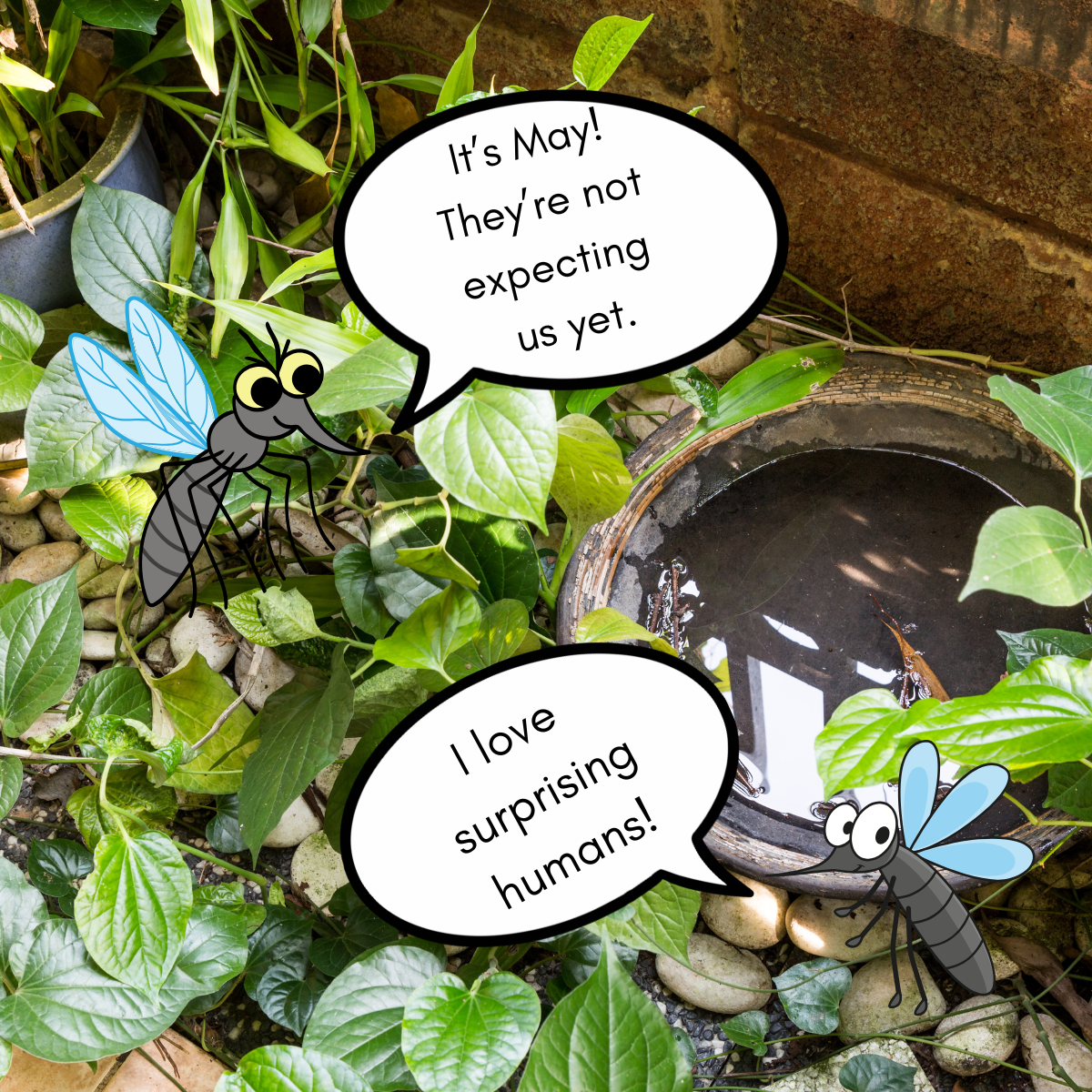
This spring brought unpredictable weather patterns to Alameda County—from 90° heat in March to heavy downpours in April. The repeated cycles of rain and heat have allowed mosquitoes to emerge earlier than usual throughout the Bay Area.
In March alone, we received 177 service requests—one of the highest March totals in our recorded history. Typically, mosquitoes follow a predictable seasonal pattern, with specific species hatching at certain times of the year. However, due to this year’s combination of heat and rainfall, some species have appeared earlier than in previous years.
Operations Supervisor Joseph Huston puts it simply: “We are a month ahead with our mosquito populations this year.” As a result, sites that usually become issues in the spring are already producing mosquitoes, while some winter sources have not yet dried up.
Our team has been actively working in both the field and the lab to monitor conditions and prevent further mosquito development. In the meantime, remember to dump, drain, or remove containers around your home that can contain standing water. And...if you’re noticing mosquitoes earlier than expected, you’re certainly not alone.
Strong showing at conferences

Members of our staff had a strong showing at two conferences, the Mosquito and Vector Control Association of California Annual Conference and the American Mosquito Control Association Annual Meeting. Our contributions included presenting eight talks and posters, moderating seven symposiums, and coordinating a drone workshop.
Through these presentations, we highlighted several of our most innovative projects—efforts that can help support other districts in the fight against mosquitoes.
Here's the full list of our presentations:
· A Century of Mosquito Control in the San Francisco Baylands
· Interactive Dashboards for Mosquitofish Rearing Operations and Public Outreach Initiatives Using Google Looker Studio
· Leveraging “Ally” — A Voice Artificial Intelligence System to Enhance Operational Efficiency and Community Response During the Aedes aegypti Expansion in Alameda County
· Mosquito Abatement Through Empowerment Integrating Mechanized Farming and Community-Led Mosquito Control (poster)
· Using AI as a Subject-Matter Force Multiplier
· Using DNA Barcoding and eDNA to Guide Field Treatment Decisions for Aedes aegypti
· The Hotswap Trap: A Modular, Low-Cost Mosquito Trap with Minimal Fabrication and Easy Maintenance (poster)
· Wrangling Wranglers: Wrangling Right-Hand Drive Jeeps into a Catch Basin Workhorse (poster)
New trustees for Piedmont and County-at-Large
Ted Kinch is the new trustee for Piedmont. We thank Hope Salzer for her contributions to the District since 2022.
Don McCoon is the new trustee for the County of Alameda. We thank Cathy Roache for her years of service to the Alameda County Department of Agriculture and for her years as a trustee for the District.

Mosquitoes love bird baths too

Mosquitoes love bird baths because they provide standing water and often have birds and other animals nearby- perfect for a quick bloodmeal. If you have a bird bath, make sure to clean it out weekly or treat it with anti-mosquito bacteria. To learn how to protect your bird bath visit: https://www.mosquitoes.org/biological-control
Spotlight on innovation
Treating male mosquitoes with Wolbachia bacteria has become a well-regarded method to reduce invasive Aedes aegypti mosquitoes in residential neighborhoods. Watch the video above to learn more!
Wolbachia for mosquito control

On May 1st we confirmed our first West Nile virus positive bird of the year. West Nile virus is considered endemic in California. In 2025, detections were low in Alameda County, with only a small number of positive birds and no detections in mosquitoes or other animals. These low levels were consistent with other coastal California counties. However, this does not guarantee similarly low activity in 2026.
We encourage everyone to take steps to prevent mosquito breeding in and around their home. Dump, drain, or remove any containers that can hold standing water, repair damaged window or door screens, and report mosquito activity to our office at 510-783-7744.
If you encounter a dead bird in California, please report it to the West Nile virus Call Center: https://westnile.ca.gov/report.