Fall 2026 Newsletter
Quarterly News and Updates
Old enemy, new tool - Reducing invasive Aedes aegypti mosquitoes in Alameda County
Since their introduction to California in 2013, they have become established in the Central Valley, Southern California, and in parts of Northern California. Within the last four years, it has also been found in the Bay Area including Alameda, Contra Costa, Solano, Santa Clara, and San Mateo Counties. Since 2024, ACMAD has detected numerous Aedes aegypti mosquitoes throughout the Tri-Valley, primarily in Livermore. Despite extensive door-to-door inspections, mosquito control treatments, and public outreach campaigns, the number of detections has increased each year.
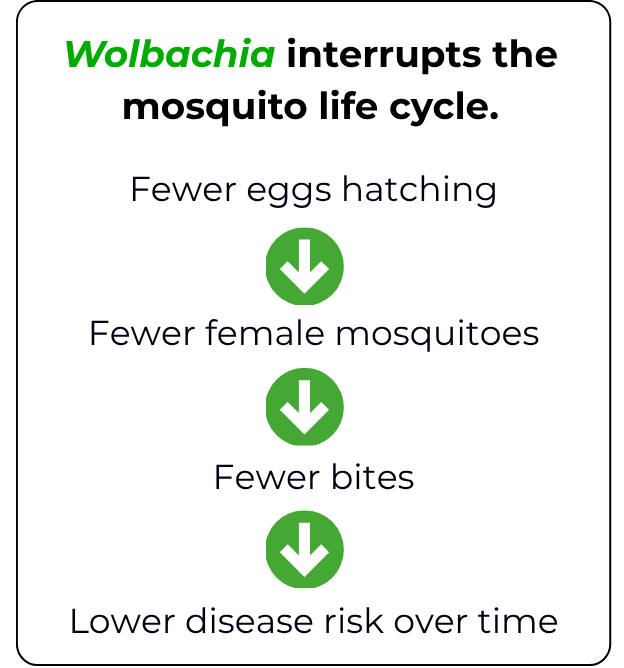
In early 2026, District staff began developing an innovative mosquito reduction program to supplement ACMAD's mosquito control efforts in Livermore. This method, which has been used in other parts of the country and abroad, utilizes male mosquitoes carrying Wolbachia bacteria to interrupt the reproductive cycle of local female mosquitoes.
Wolbachia is a bacterium that is naturally found in about 60% of insects, such as butterflies, bees, and dragonflies. When male mosquitoes carrying an incompatible strain of Wolbachia mate with local female mosquitoes, the resulting eggs do not hatch.
Collaboration throughout ACMAD
In preparation for this new approach to mosquito control, ACMAD staff carefully evaluated potential release sites and the conditions under which the program would be most effective. Outreach staff developed printed and online educational materials to inform Livermore residents about the program. District staff from the Laboratory and Outreach departments also presented to the Livermore City Council and collaborated closely with city staff to ensure residents understood the program and its goals.
Launch of the Innovative Mosquito Reduction Program
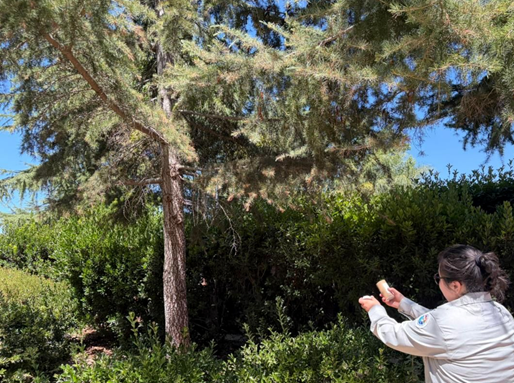
On July 7, ACMAD released its first batch 15,000 Wolbachia male mosquitoes in two Livermore neighborhoods. Over the following 16 weeks, District staff evaluated mosquito trap data, adjusted release strategies, and modified release locations based on mosquito activity and program results.
After 16 weeks of releasing Wolbachia male mosquitoes in Livermore, ACMAD is encouraged by the positive reception from residents and the opportunity to incorporate this innovative approach into our mosquito control efforts. The program concludes on October 22, and District staff look forward to evaluating its results and exploring opportunities to expand the use of this tool next year.
Learn more about Innovative Mosquito Reduction in Alameda County
Staff Update

ACMAD welcomes back Miguel Cardenas to the role of Vector Biologist in the southern part of Alameda County.
Spotlight on the Partnership between Alameda County Public Health and ACMAD
For decades, the Alameda County Mosquito Abatement District (ACMAD) has maintained a strong relationship with Alameda County Public Health (ACPH). As mosquito-borne illnesses have increased around the globe, ACMAD has worked to strengthen this partnership by hosting ACPH officials at the District office, including Health Officer Dr. Nicholas Moss, Director of Clinical Guidance and Communicable Disease Controller Dr. Kavita Trivedi, and Director of the Acute Communicable Diseases Section Munira Shemsu.
These in-person meetings have provided ACPH staff with a clearer understanding of how ACMAD uses data-driven strategies to reduce mosquito breeding habitats and respond to potential disease threats. The ACPH team expressed appreciation for the District's ability to respond rapidly to information about potential mosquito-borne illnesses in the county. While larger agencies often must navigate multiple layers of bureaucracy before taking action, smaller districts like ACMAD can initiate interventions within hours.

Building on these meetings, the two agencies now meet quarterly to discuss mosquito-borne illness trends, emerging technologies, and opportunities to collaborate on public health messaging. Through this partnership, ACPH has also invited ACMAD for the past few years to present during one of its monthly calls with dozens of healthcare professionals throughout Alameda County. These presentations help increase awareness of mosquito-borne illnesses among clinicians and keep them informed of emerging trends.
A key message of ACMAD's 2026 presentation was that dengue is now a concern in the continental United States, with Florida confirming over 360 cases of local transmission. ACMAD staff encouraged clinicians to consider dengue testing for patients exhibiting symptoms, even if they had not recently traveled outside the country.
Ongoing communication and collaboration with ACPH continue to reinforce ACMAD's reputation for technical expertise, accessibility, and rapid response—qualities that strengthen the partnership and support public health efforts throughout Alameda County.
A Nuisance that becomes a Menace: Summer salt marsh mosquito (Aedes dorsalis)
A common misconception we hear at ACMAD is that mosquitoes cannot breed in salt water. That's not true!

In fact, the Alameda County Mosquito Abatement District was established in 1930 in response to aggressive mosquitoes breeding in the salt marshes along the county's shoreline. These mosquitoes were a significant nuisance then, and unfortunately, they continue to return every year.
One of these mosquitoes, Aedes dorsalis (AY-ee-deez dor-SAL-is), has recently caused significant problems for residents in Newark and Alameda. This salt marsh mosquito is native to Alameda County, is most active during the summer months, and does not transmit diseases.
Aedes dorsalis mosquitoes lay their eggs on moist soil, mud, and vegetation in salt marshes. When exceptionally high tides flood these areas, particularly during warm weather, the eggs can hatch in large numbers. The resulting surge in adult mosquitoes can lead to intense biting activity in nearby neighborhoods and parks.
ACMAD conducts year-round mosquito control treatments throughout Alameda County, including routine larval control treatments in the tidal salt marshes along the East Bay shoreline. However, due to the large size, protected status, and limited accessibility of these marshes, it is not possible to treat every mosquito breeding source.
We encourage residents to protect themselves from mosquito bites by:
- Applying insect repellents containing EPA-registered active ingredients, such as DEET, picaridin, IR3535, or oil of lemon eucalyptus.
- Wearing long-sleeved shirts, long pants, socks, and shoes when mosquitoes are most active.
- Checking that window and door screens are in good condition.
West Nile virus activity at a 5-year high in California
West Nile virus (WNV) numbers have been higher this year than in the previous five years throughout the state. As of October 2026, high levels of WNV activity, including human cases, have been found in Orange and Los Angeles Counties.
If you are traveling in Southern California or the Central Valley, consider protecting yourself from mosquito bites by using EPA-registered repellent.
Latest WNV Activity in Alameda County

So far in 2026, ACMAD has detected West Nile virus in 10 mosquito samples in Newark, Union City, and Fremont. West Nile virus is primarily spread through the bite of an infected mosquito.
ACMAD has also detected West Nile virus in 39 dead birds in Alameda County. Birds—especially corvids such as crows and ravens—are particularly susceptible to the virus and often serve as an early indicator that the virus is circulating in an area.
If you find a dead bird in California, please report it using one of the following options:
- By phone: Call the California West Nile Virus Call Center at 1-877-968-2473 (available April–October).
- Online: Submit a dead bird report at WestNile.ca.gov/report (available year-round).