
Quarterly Newsletter and Updates Winter 2026
We appreciate the rain—but keep the mosquitoes away
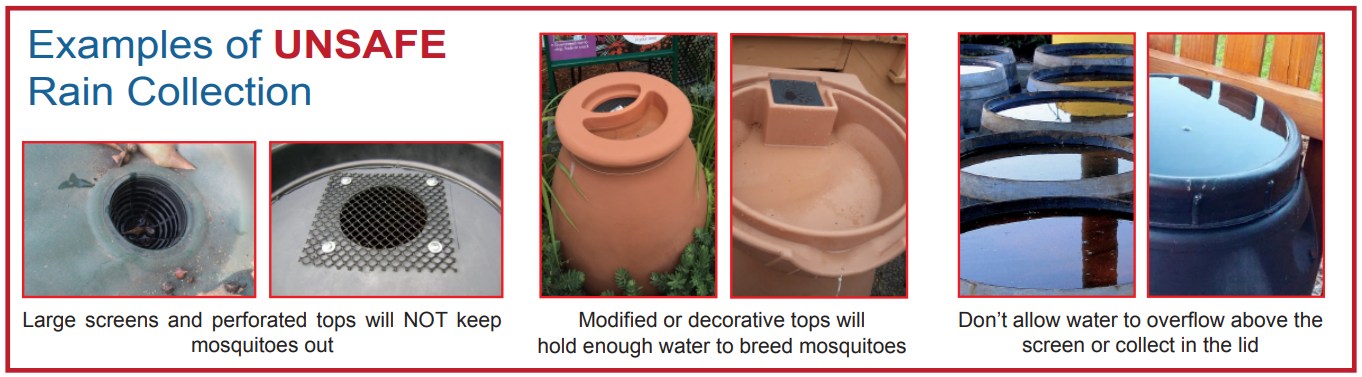
As Californians, we welcome rain after years of drought restrictions. Many residents choose to capture rainwater for use in gardens and around the home throughout the year. While this is commendable, improperly stored water can quickly become a mosquito breeding site.
Our staff routinely find water stored in a wide variety of containers—some suitable, others not. If you plan to store water, choose a system that is easy to maintain. If regular maintenance isn’t possible, it’s safer to release the water than to store it in a way that could attract mosquitoes.
For large water storage containers:
- Maintain intact screens or mesh with openings no larger than 1/16 inch; replace damaged or deteriorating screens.
- Ensure water flows freely and is not blocked by leaves or debris.
- Use stored water as quickly as possible.
- Check for design features such as divots or recessed areas that allow water to collect and remain stagnant.
For informal water containers:
- Secure a tight-fitting lid.
- Cover openings with fine 1/16-inch mesh and fasten it securely with cord or rope.
- Use the stored water promptly.
Thank you to San Gabriel Valley Mosquito and Vector Control District for sharing their rain collection images
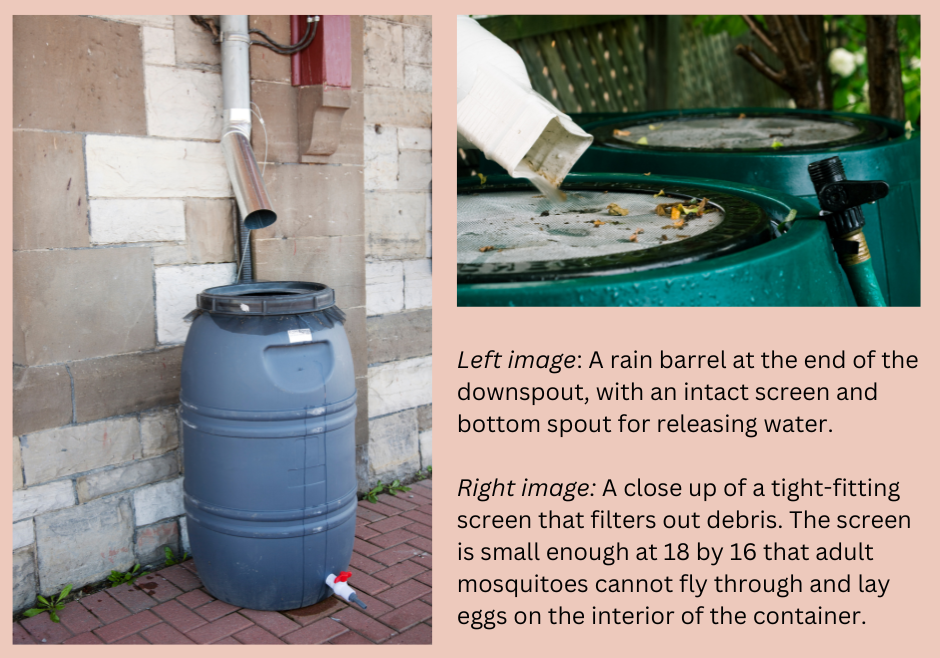
Tried and true methods to prevent mosquitoes
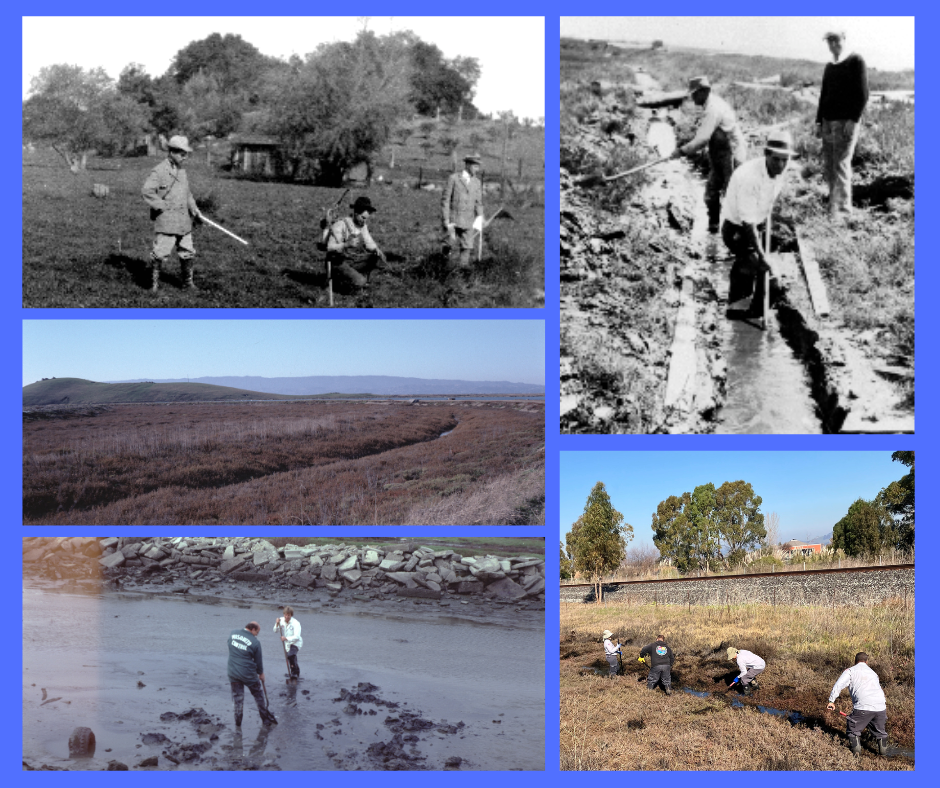
Our district uses an Integrated Vector Management (IVM) approach to control mosquitoes, combining physical, biological, and chemical methods tailored to specific environments. We pride ourselves on being leaders in technology, from our aerial pool monitoring program to the use of drones. While new tools continue to improve mosquito prevention, in some cases the most effective solutions are also the simplest—such as a shovel and a map.
Ditching, the process of reshaping land in areas where water becomes trapped to restore water flow, is a tried-and-true tool for mosquito control. Each winter, staff work in marsh areas along the Alameda County shoreline to maintain existing ditches which become clogged with debris and overgrowth. Work is carefully planned in advance and permitted through numerous state and federal agencies. Although ditching days are physically demanding for our Operations team, this preventative winter work significantly reduces mosquito breeding opportunities throughout the year.
The images above are from the District's historic photos, which includes images from the beginning of mosquito control in the 1930's through today.
New trustee for Alameda
Nick Ksiazek is the new trustee for the city of Alameda. The District thanks former trustee, Tyler Savage, for his years of service.
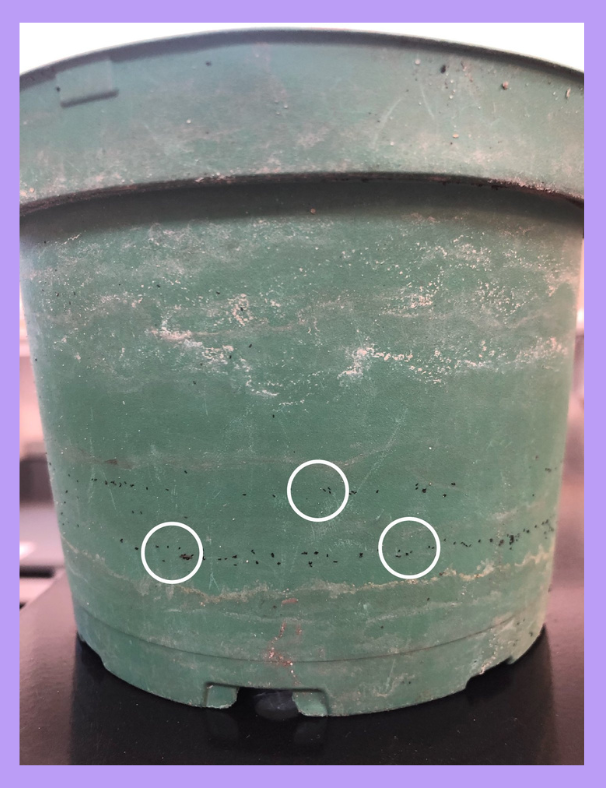
Sticky eggs on containers
Screen check

Many things can damage window screens—cat claws, pinpricks, even dart practice. While screens may not get much use in winter, it’s wise to inspect them before spring arrives. Check both the center and the edges to make sure the screen is intact and securely attached. Small holes can be easily fixed with screen patches or repair tape. For larger damage, consider replacing the entire screen, either by purchasing one at a local hardware store or installing new screening yourself. Screens are a low-cost, first-line defense against mosquitoes entering your home, and repairing or replacing them before winter ends makes it easier to enjoy open windows when spring returns.

Last year in the Bay Area we saw very low West Nile virus numbers, however West Nile virus circulated a lot in the Central Valley, particularly around Visalia.
If you’re traveling to areas with higher West Nile virus activity, remember to limit outdoor exposure, wear long sleeves and pants, and use mosquito repellent, even during winter.
West Nile virus is endemic in California—it often recedes and then flares up again. Residents are encouraged to keep their homes protected from mosquitoes by maintaining window and door screens in good condition and by inspecting for standing water, including areas such as sump pumps.