
Invasive Aedes aegypti, the yellow fever mosquito, in Alameda County

What is Aedes aegypti?
Aedes aegypti, known as the yellow fever mosquito, is an invasive species native to Africa and it is a growing concern in many California counties and communities. First discovered in 2013 in Fresno, Madera, and San Mateo counties, Aedes aegypti is now found in at least 28 counties in California. Since 2024, the District has found numerous adults and larval Aedes aegypti mosquitoes in the Tri-valley and Fremont. If Aedes aegypti becomes established in Alameda County, it could threaten public health and quality of life, as these mosquitoes are highly aggressive and active during daylight hours.
The yellow fever mosquitoes are difficult to control once established in a neighborhood. Aedes aegypti are considered disease vectors, which means that this species can transmit diseases, such as dengue fever, Zika, chikungunya and yellow fever. While there is no current local disease transmission of these diseases that Aedes aegypti can transmit, the presence of this mosquito increases public-health risk because they prefer to bite humans for their blood meals. Blood meals are needed by female Aedes aegypti mosquitoes to produce their eggs.
Unlike most native mosquitoes, this species prefers to live in and around people’s homes. Aedes aegypti mosquitoes thrive in very small amounts of water, often in containers no larger than a bottle cap. Because Aedes aegypti mosquitoes can reproduce rapidly and hide discreetly in residential areas, community awareness and participation are crucial to limiting the spread of this mosquito. The Alameda County Mosquito Abatement District (ACMAD) is actively monitoring this species and providing resources to help residents reduce mosquito populations around their homes.
Aedes aegypti Life Cycle

Aedes aegypti has a fast and resilient life cycle, allowing it to multiply quickly when conditions are warm. Females typically lay their eggs on the inner walls of containers just above the waterline. These eggs are hardy and can survive dry conditions for months, making accidental spread easy if containers are moved to different locations.
Once water rises and submerges the eggs—after rain, irrigation, or filling a container—the larvae hatch and begin developing. Larvae and pupae live in the same small water sources and can complete their development into adults in as little as 7 to 10 days. This quick turnaround means even a small container can produce several generations (a single female Aedes aegypti mosquito can lay from 50-300 eggs in her lifetime!) in a single season.
Aedes aegypti Habitat
.png?ixlib=rb-1.1.0&w=2000&h=2000&fit=max&or=0&s=8be162ff5e7d54aafa88deb58beba943)
This mosquito is uniquely adapted to human environments and prefers urban and suburban neighborhoods. Unlike most of our native mosquitoes in Alameda County, Aedes aegypti use a wide range of standing water sources, such as small, man-made containers found around homes and yards. Common breeding grounds include plant saucers, buckets, toys, yard litter, pet dishes, watering cans, tarps and even bottle caps. These sources are also referred to "cryptic" sources, meaning they tend to be hidden and often overlooked. The species also takes advantage of shaded, protected areas such as patios, garages, and cluttered outdoor spaces where water may collect.
Because Aedes aegypti are comfortable living inside, residents may also experience biting indoors. This mosquito can also complete its life cycle indoors, they are often found in standing water in flower vases and containers used for plant cuttings or propagation. Aedes aegypti also often rest under furniture, behind curtains, or in other dark corners of the home. Any location with standing water for longer than 5 days can become a breeding source. Use our checklist to get started on inspecting for standing water around your home and yard on a weekly basis.
Working together to reduce Aedes aegypti in Alameda County
The Alameda County Mosquito Abatement District uses an Integrated Vector Management (IVM) approach to control Aedes aegypti in Alameda County. We monitor mosquito species and abundance using specialized monitoring traps, respond rapidly to new detections, and conduct neighborhood inspections to identify and eliminate potential breeding sources. When applicable, the District uses environmentally responsible larval control products and additional strategies (such as Sterile Insect Technique (SIT)) to disrupt the mosquito life cycle and decrease mosquito populations.
Because this mosquito primarily breeds in residential yards, community participation is essential to our work. Residents can support control efforts by eliminating standing water every week, scrubbing water-holding items to remove eggs, and reducing clutter where water could accidentally collect. Promptly reporting unusual mosquito activity helps District staff respond quickly and effectively.
Identifying Aedes aegypti, the yellow fever mosquito
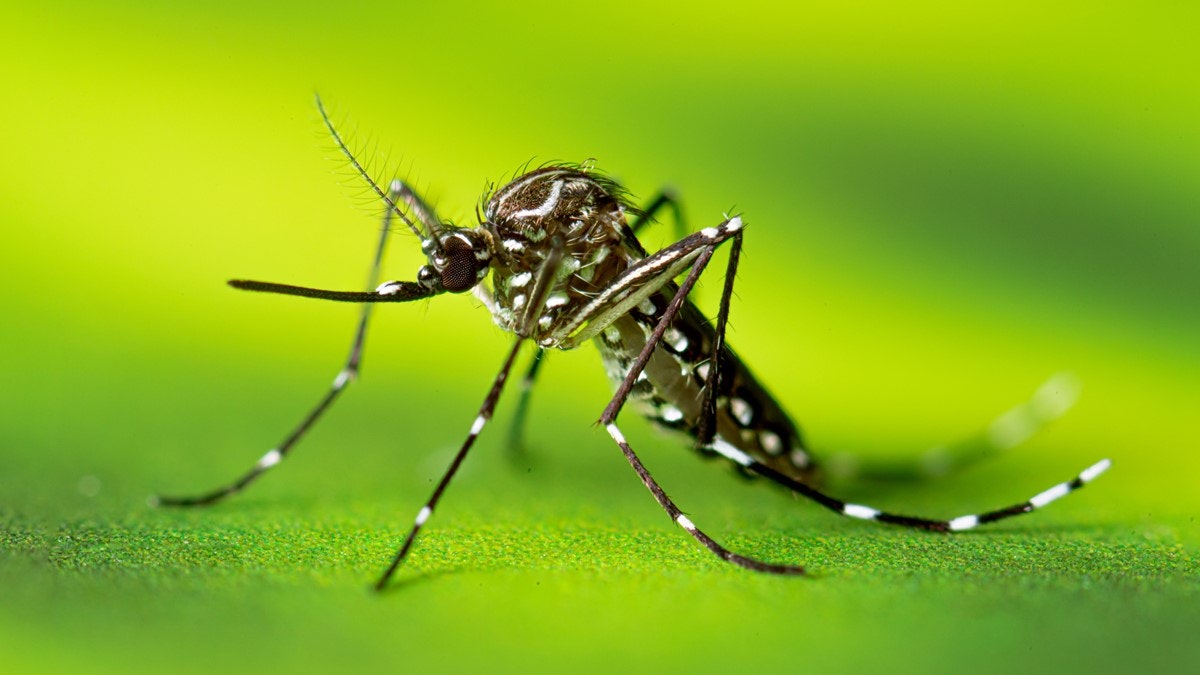
The yellow fever mosquito, Aedes aegypti, are smaller than many other California native mosquito species and have distinct black-and-white markings. Adults have a black body with a white, lyre-shaped pattern on the back, along with white banded legs. Their small size- smaller than a dime, which makes them easy to overlook.
Behaviorally, they are different from many native species because they bite aggressively during the day, particularly in the early morning and late afternoon. They often bite ankles and lower legs and may bite multiple times in a short period. Residents may also notice them indoors, as they readily enter homes looking for people to bite.
If you believe that you have found Aedes aegypti in Alameda County, take a clear picture of the mosquito sample and submit the form below.
District staff will contact you to share findings and, if needed, discuss next steps.
How to prevent Aedes aegypti in your Home and Community
Preventing this mosquito requires a consistent weekly routine focused on removing standing water. Residents should empty, drain, and dry all outdoor containers, including plant saucers, buckets, toys, and anything else that can collect rain or irrigation water. Keeping yards tidy and storing items under in sheds or upside down helps reduce unexpected breeding sources. Repairing or replacing window and door screens can help keep mosquitoes outside, and using fans—indoors or on patios—can make it harder for mosquitoes to land and bite.
Protecting yourself from bites is also important. Residents can wear long-sleeved shirts, pants, socks, and shoes when mosquitoes are most active. Repellents containing EPA-registered ingredients such as DEET, picaridin, IR3535, or oil of lemon eucalyptus also provide effective protection. Residents should also follow age-appropriate guidance for children and consult a pediatrician for safe repellent options for infants.
Aedes aegypti is an invasive mosquito that requires community awareness and proactive action to prevent its presence in Alameda County. By understanding where it breeds, how it behaves, and what steps reduce its presence, residents can play a significant role in protecting their homes and neighborhoods. Together, we can limit this mosquito’s impact and support a healthier community.
For questions, inspections, or to report unusual mosquito activity, contact the Alameda County Mosquito Abatement District at 510-783-7744. District staff can help residents identify mosquitoes, eliminate breeding sources, and stay informed about local mosquito activity.
